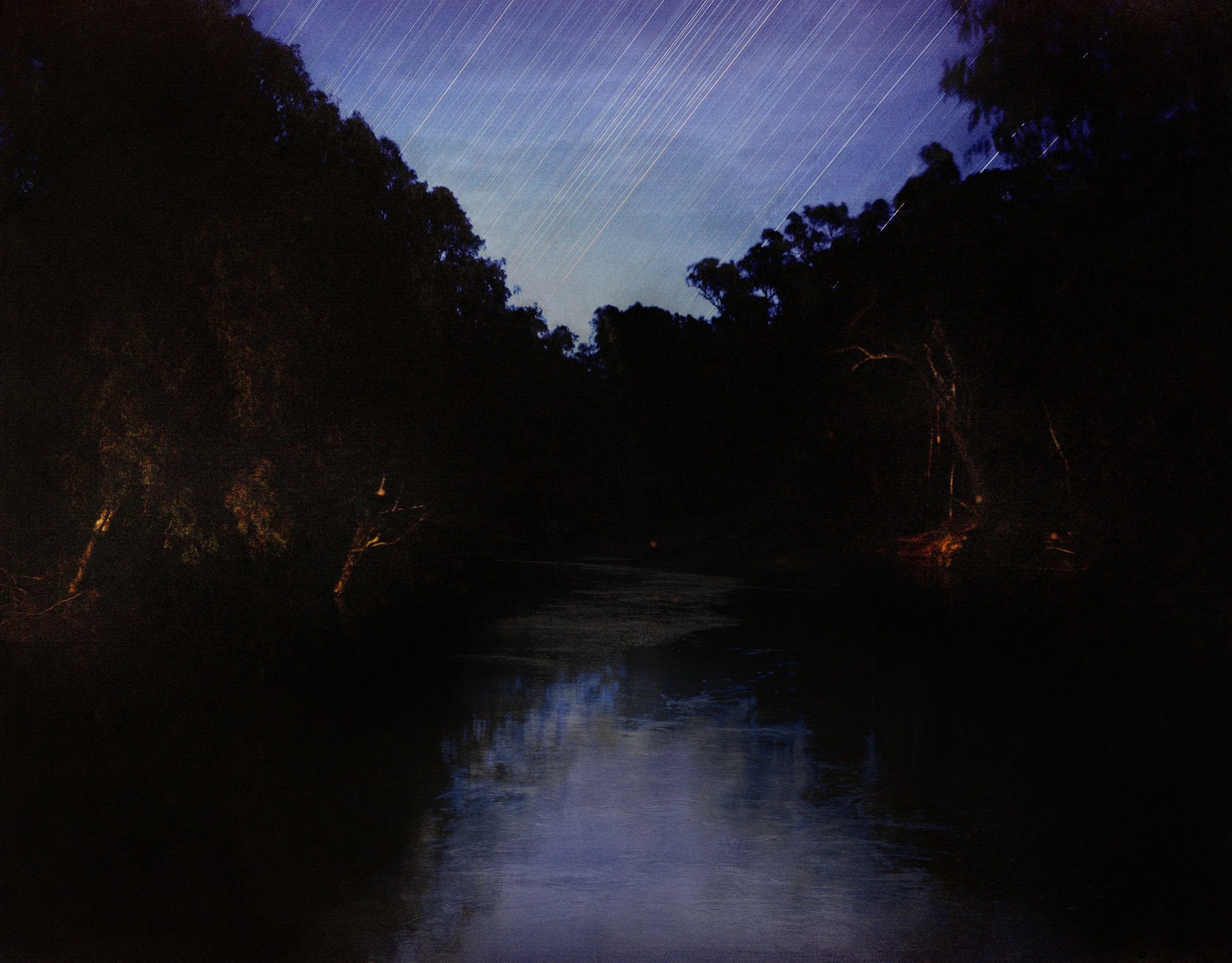
Peta Clancy, ‘Sleeping under the same stars 1’, 2026, framed inkjet pigment print (Canson Rag Photographique), 80 × 102cm.
Sleeping under the same stars
Colonial Australian landscape photographs carry a dark and untruthful history of the land and what occurred here. Many of these photographs asserted settler-colonial possession while disregarding the violent dispossession of Aboriginal Ancestors from Country. They reinforce narratives of dispossession, erasure, and misrepresentation, shaping–and continuing to shape–perceptions of landscape and place. Even the language of photography is violent: captured, shot, and taken.
Considering this history, I have been exploring what it might mean to make photographs with Country, with respect and care. Country is not an image to be taken on a thin skin of film in a fraction of a second. Country has agency. It holds memory, knowledge, and powerful histories. Country holds secrets that she may or may not choose to reveal.
Working with large-format photographic equipment and materials—tools inherited from colonial practice–I make photographs with Yorta Yorta Country. Rather than working with sunlight, I work at night, in darkness, duration, and uncertainty, guided by the stars and the moon. These photographs are not made by sight alone; they depend upon what Country chooses to conceal or reveal. The shutter remains open for between two and six hours. The work attends to what remains unseen. The latent image. In darkness, using the same tools as colonial photographers, I expose the film for hours. There is little light to hold. Yet Country emerges—through noise and underexposure—strong and ever present. I am drawn to the potential of what cannot be seen in the bright certainty of day.
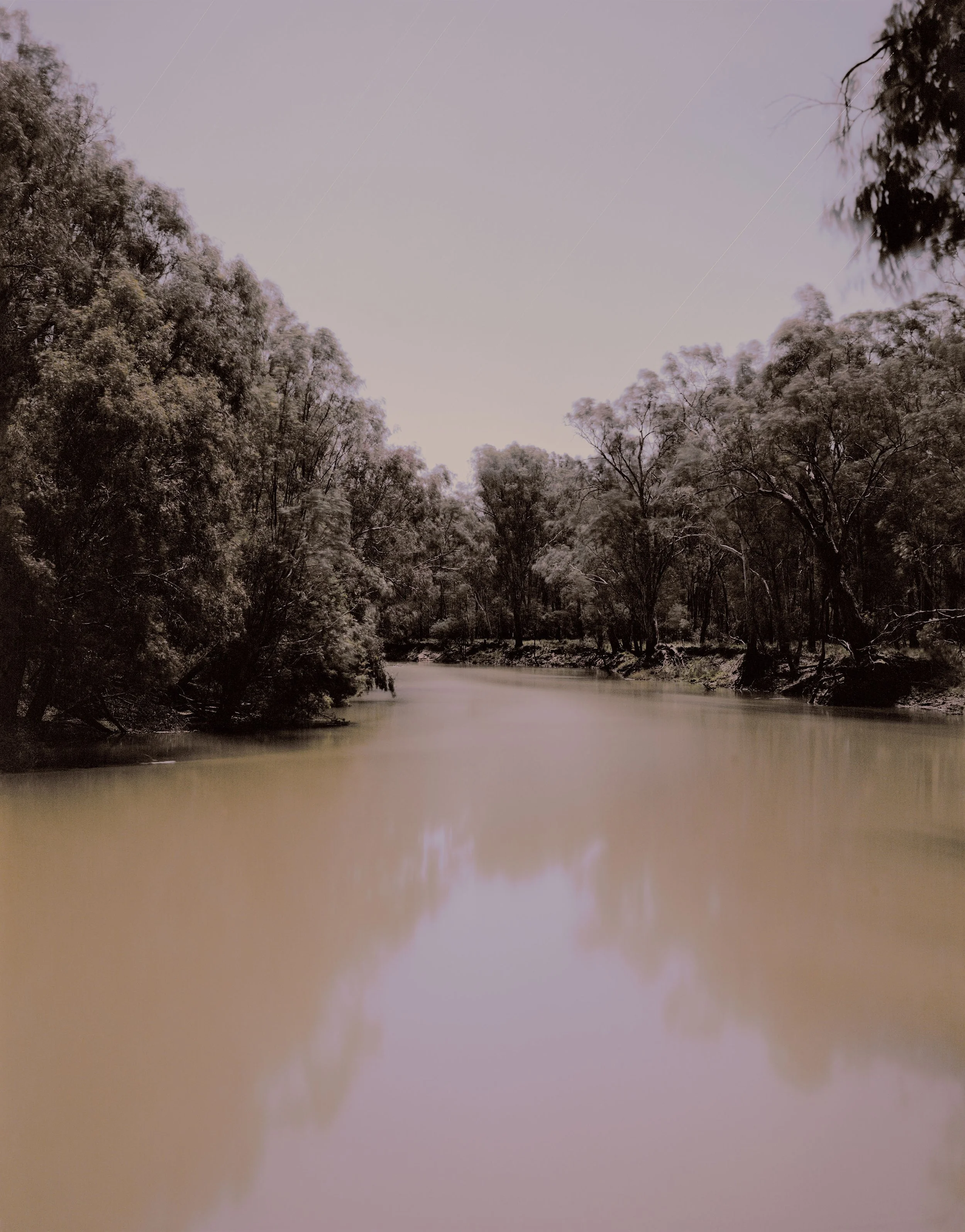
Peta Clancy, ‘Sleeping under the same stars 2’, 2026, framed inkjet pigment print (Canson Rag Photographique), 80 × 102cm.