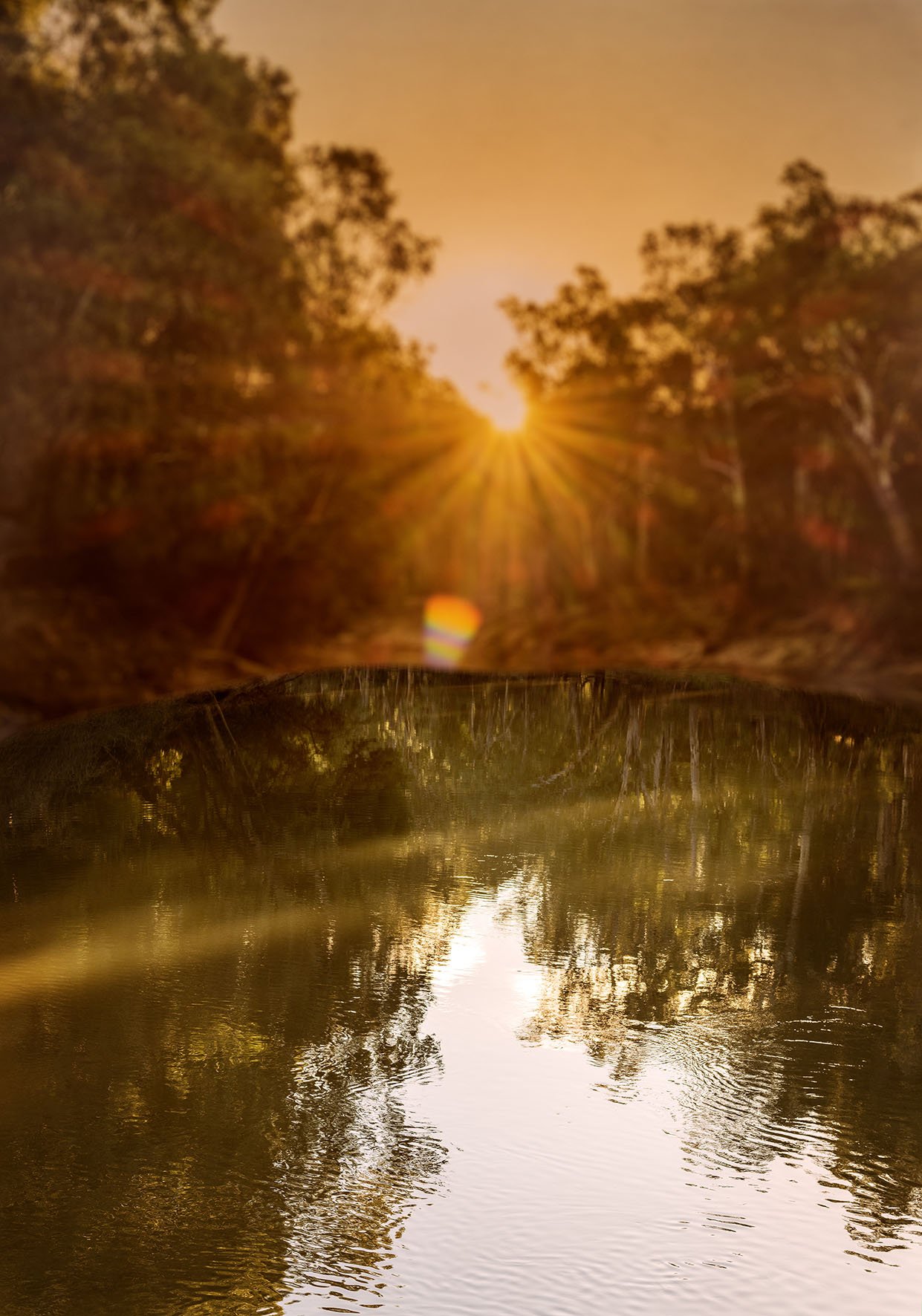
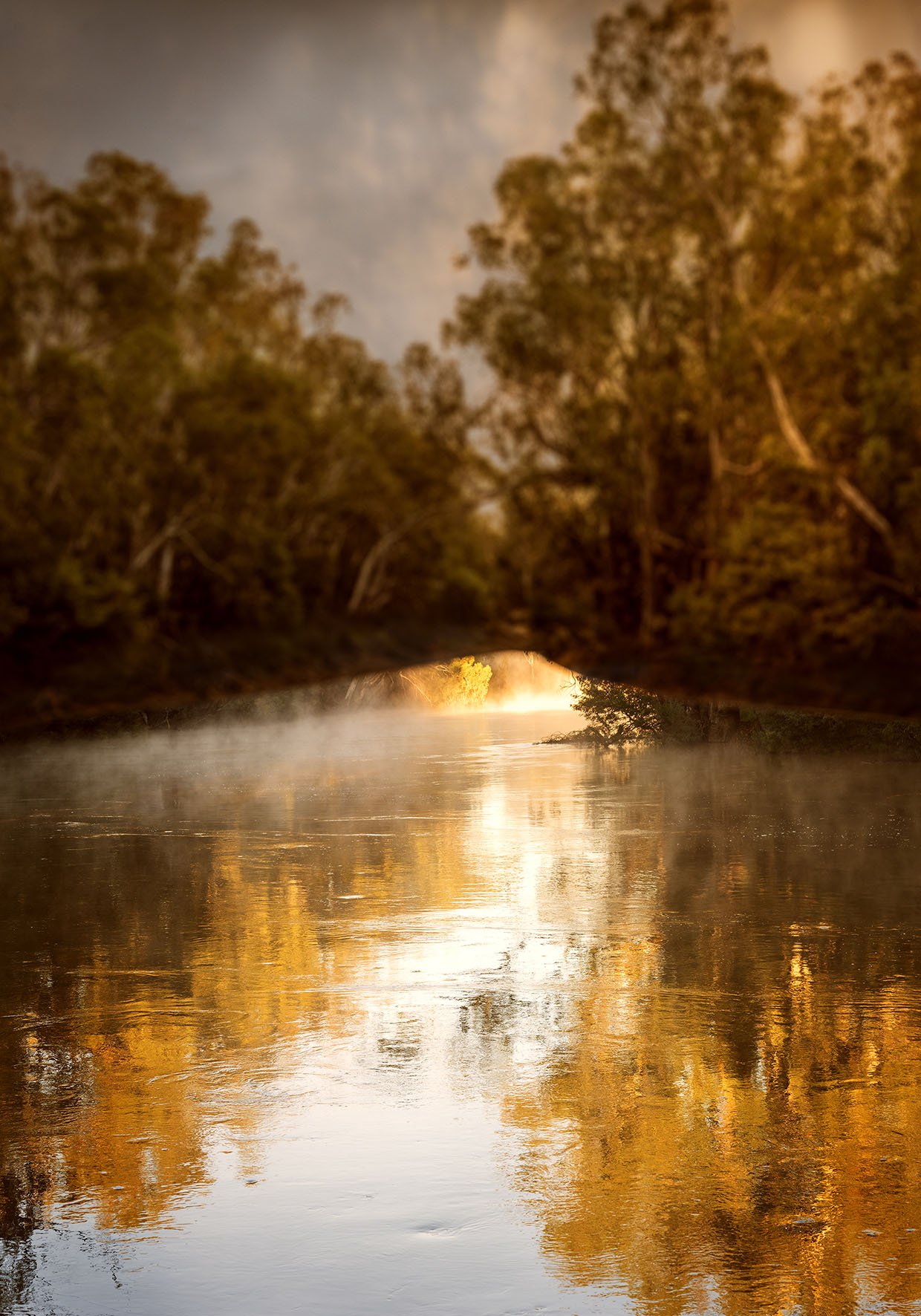
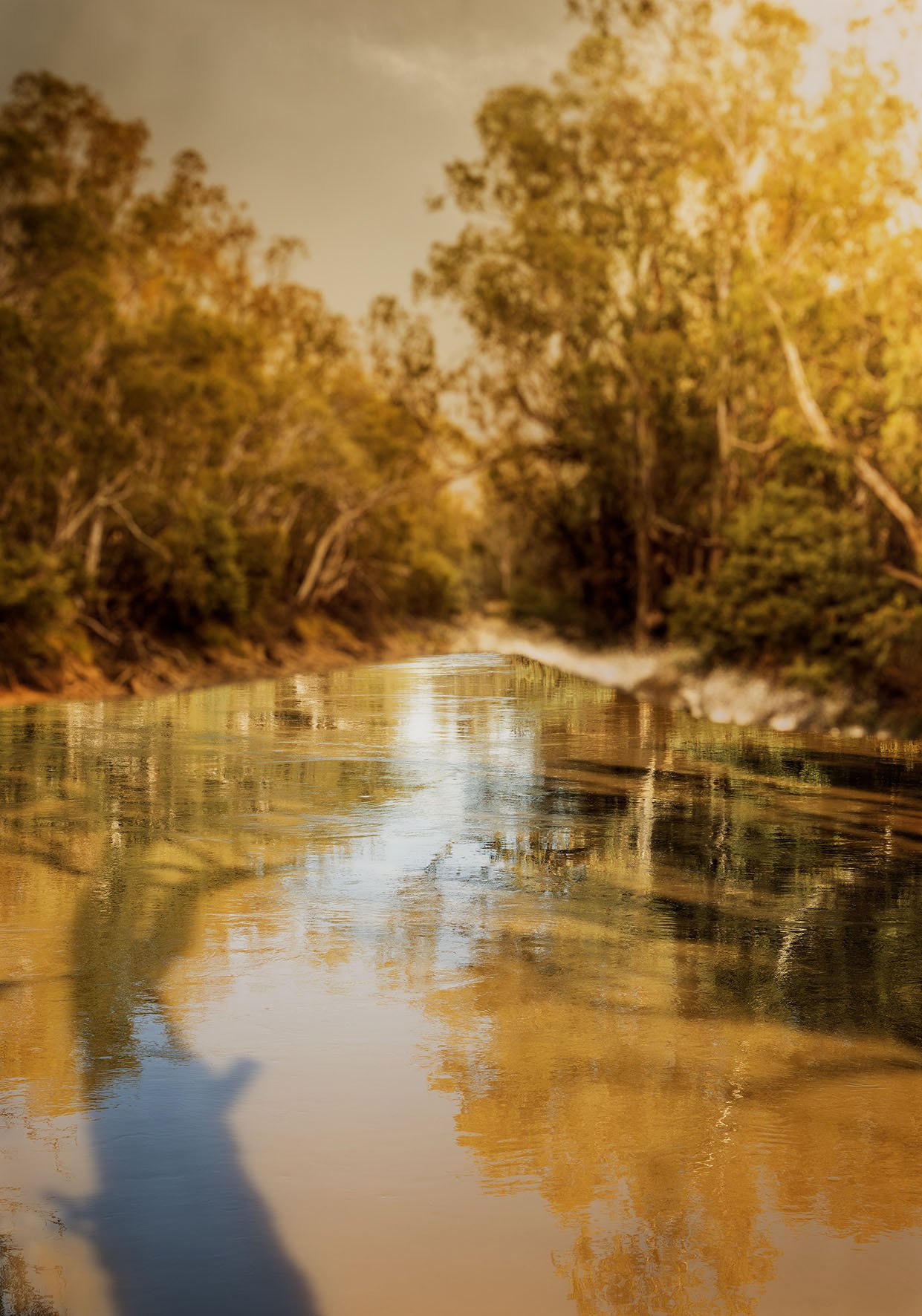
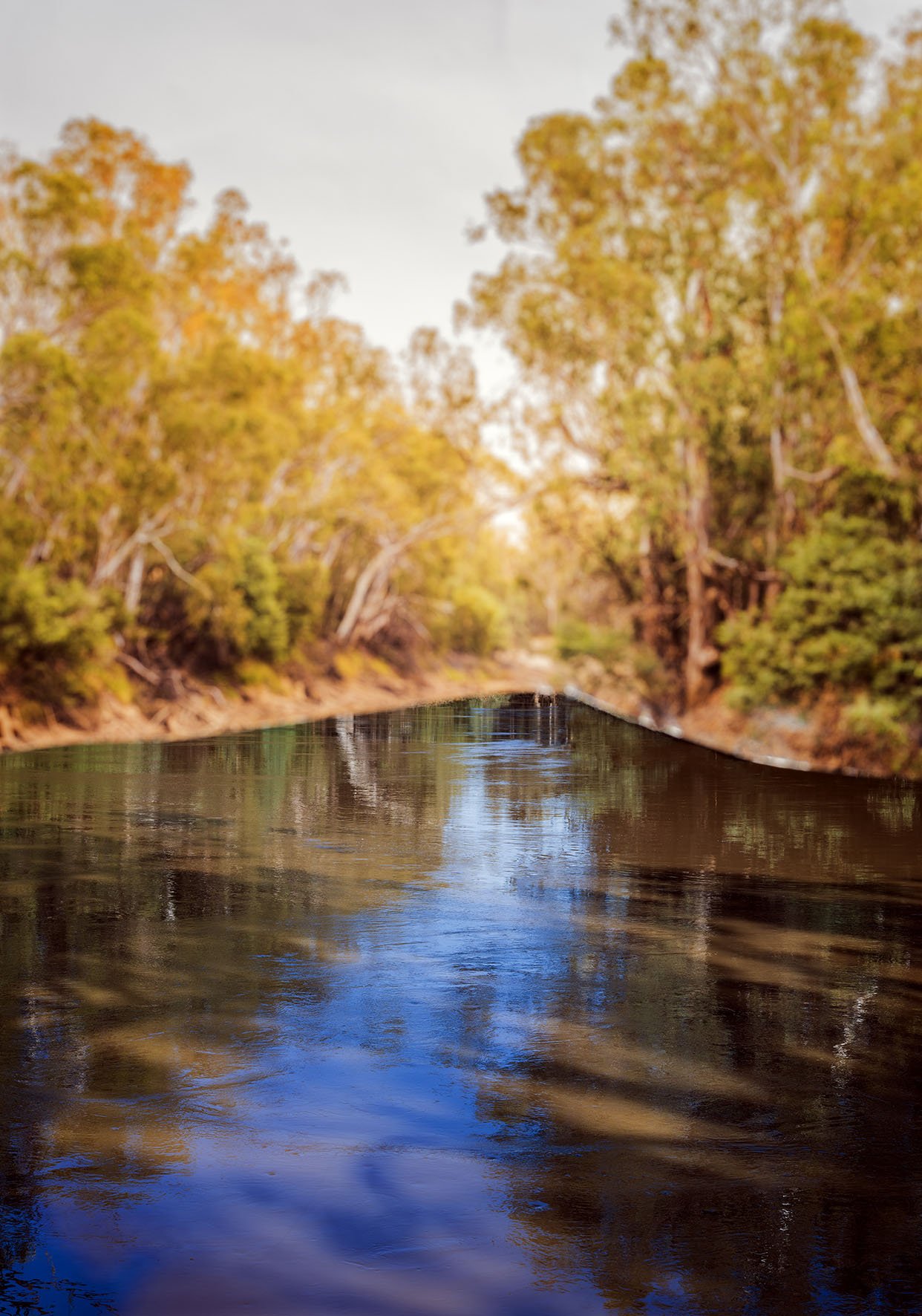
Images Still Standing 1-7, from the series The Colonial Scar and the Curative Cut, 70 x 100cm, 2026. Pigment Ink Jet prints, red gum frames
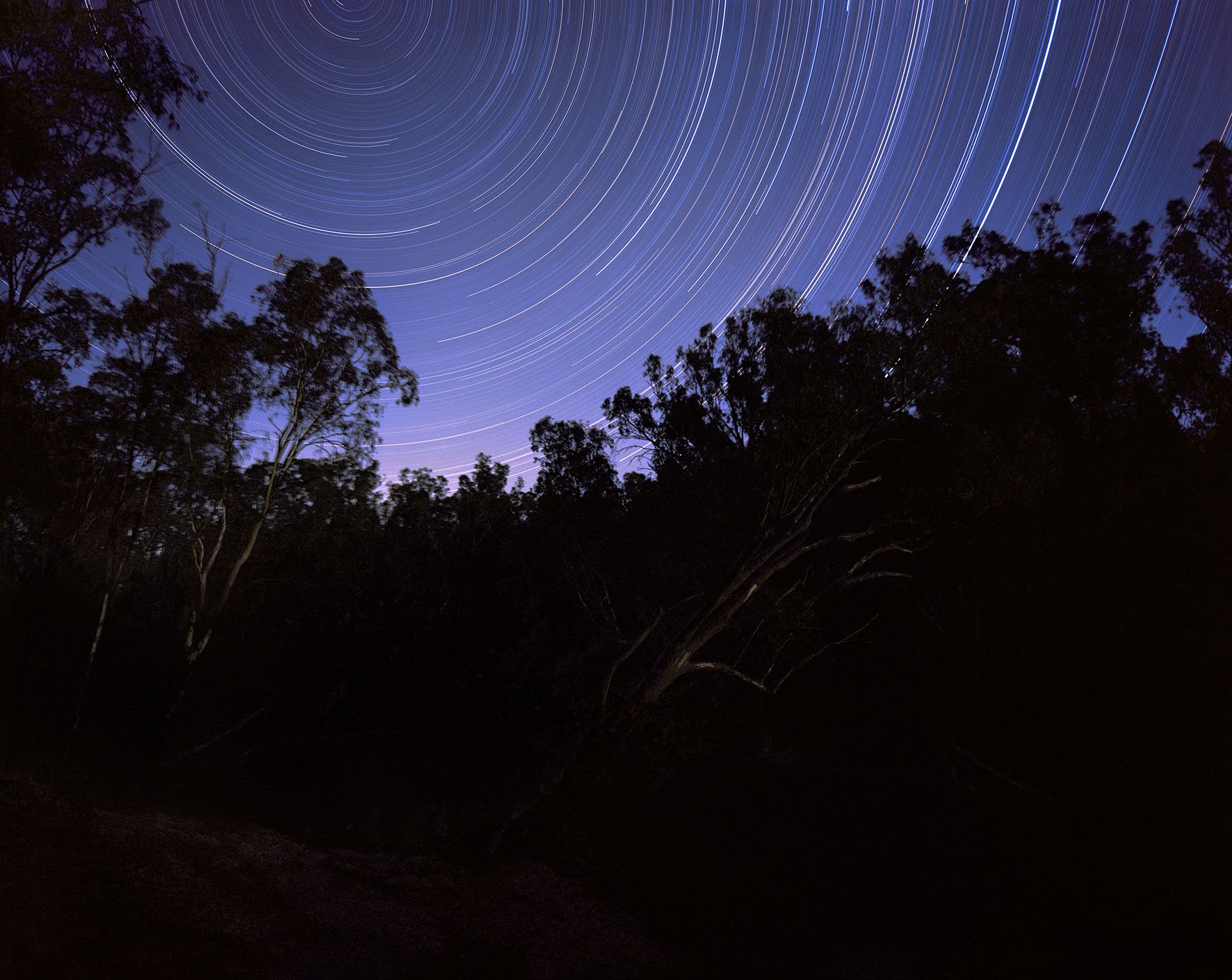
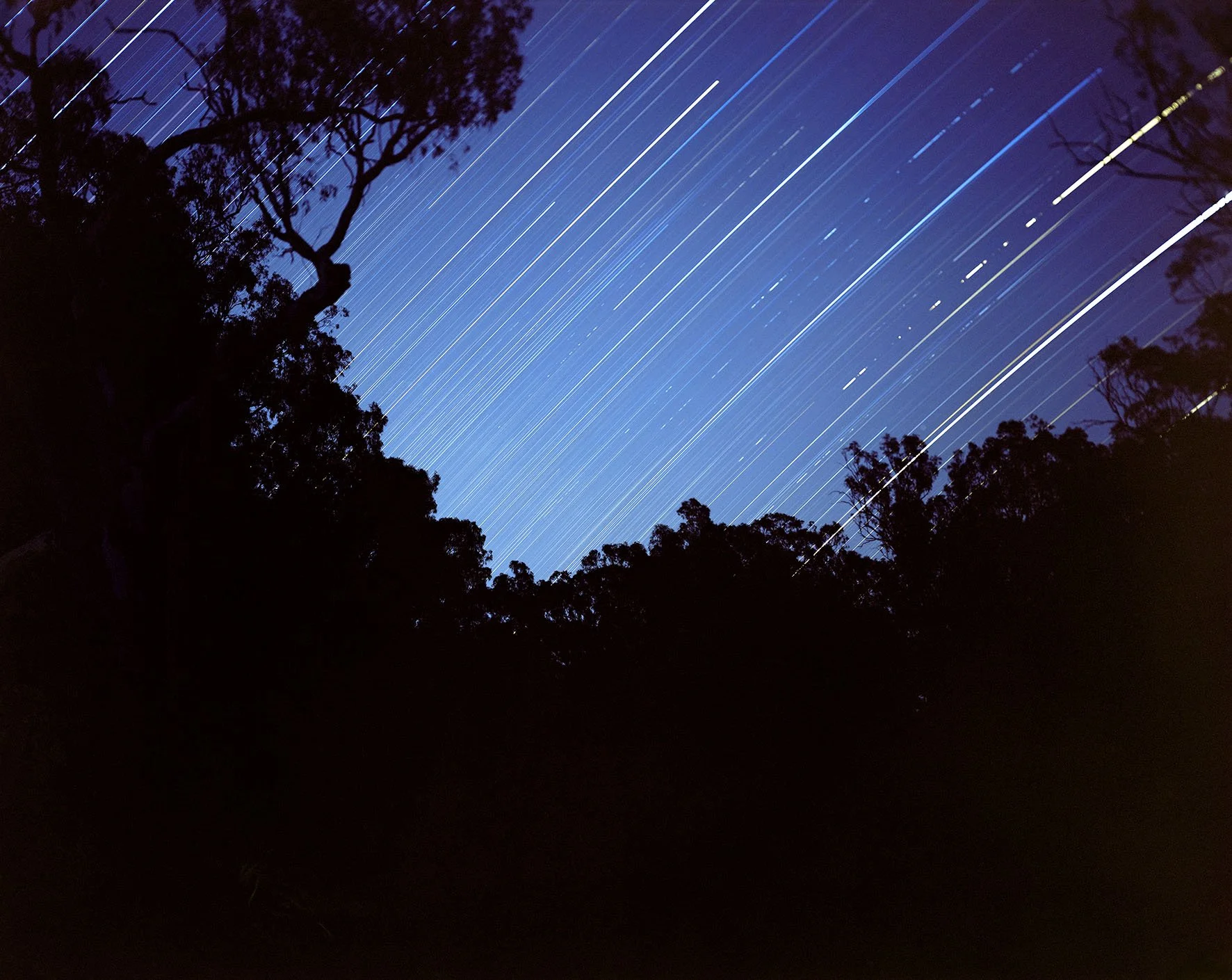
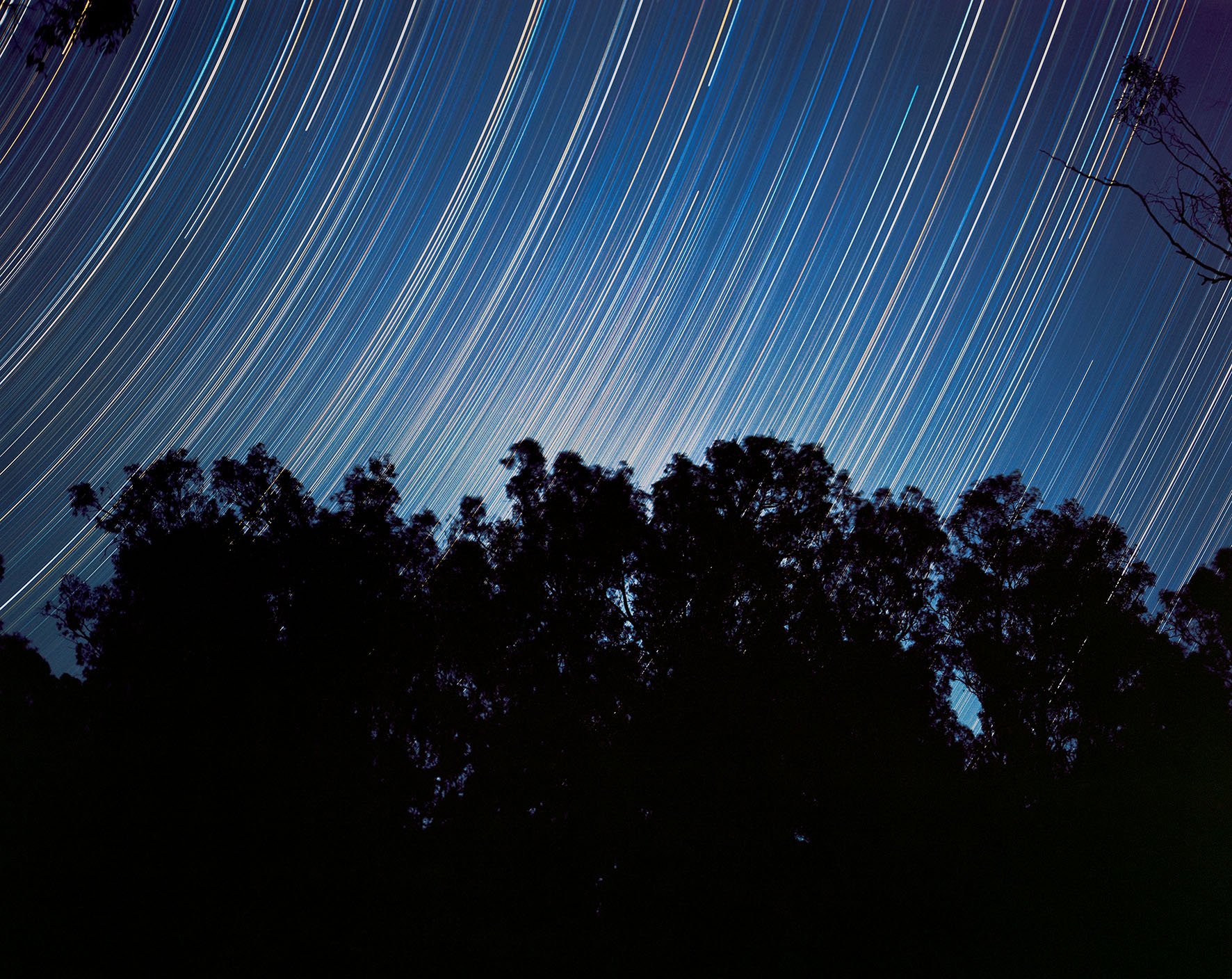
These works explore my family's and my return to our Ancestral Country, and the gentle, ongoing process of making work with Yorta Yorta Country. It is about meeting Country where she meets me, and finding ways to re-story colonial photographs of Yorta Yorta Country. Revisitation and return are at the core of these photographs. Through photography and video, I have been exploring the complex and often deeply personal emotions that returning to Ancestral Country, including profound yearning, fear and grief in response to the destruction and degradation of Country. These emotions are shaped by the legacies of colonisation, dispossession and the ruptures of intergenerational connection. The impulse to return, and the tensions and emotions this evokes, are materialised through a series of multilayered photographs, night-sky photographs and video works made in collaboration with Yorta Yorta Country.
One of the starting points for this body of work was Clancy’s encounter with historic photographs of Yorta Yorta Country held in the Museums Victoria collection. These photographs were ‘taken’ along Dhungala (the Murray River), at places where her grandmother, great-grandfather and great-great-grandmother were born, lived, or yearned to return to throughout their lives. For Clancy, these archival photographs became more than historical documents; they offered a deeply personal connection to places held within her family's memory and histories. She returned to the locations depicted in these photographs, which were originally ‘taken’ in the service of colonial expansion, a process dependent upon the dispossession of Traditional Owners, including her own family. Her return to these sites brings together personal and collective histories, confronting the violence embedded in the colonial photographic archive while seeking to establish a different relationship with the places and Country represented within it.
The night-sky photographs were made using an 8 × 10-inch large-format film camera, drawing upon the tools and conventions of colonial photography while working through darkness, duration and uncertainty. Clancy positioned the camera in daylight before opening the shutter after dark and exposing the sheet film for eight hours. Through this process, she invited Country to determine what would be concealed or revealed on the film, relinquishing some control over what the camera would record. The resulting photographs reveal Sky Country above Yorta Yorta Country.
Since colonisation, the stars have become increasingly difficult to see in many places due to light pollution from urban development. Satellites and their rapidly expanding mega-constellations further disrupt our view of the stars and constellations in the night sky. These changes have profound implications for the visibility, transmission and continuation of ancient Indigenous astronomical knowledges. The works draw attention to what has been obscured through colonisation, while acknowledging the enduring presence of these knowledges.